
 English


30 Classic Fairy Tales That Still Capture Our Imaginations
Everyone has a story. What’s your story? I remember these classic fairy tales as bedtime stories when I was little. They gave me insights into the fantasy world. “Once upon a time, there was a girl called Cinderella.” It’s the opening sentence of the fairy tale, ‘Cinderella’. And this line can’t leave my mind, no matter how old I grow.
Better yet, I also recount the same tales as moral lessons as I advanced in age. When I became a parent, I told the stories to my children. When they grow older, they will pass on the same to their generation and it goes on.
What’s more, these stories form some of my best memories with my nana and of course papa. As I look forward to sharing the same memories with my grandkids, why not have some fun together first? Let’s unravel the narratives of these classic fairy tales that stick in our minds for years.
Here are the 30 Classic Fairy Tales That Still Capture Our Imaginations.
1. Cinderella

There is plenty of variants to the classic ‘Cinderella’ sometimes known as ‘The Little Glass Slipper’ fairy tale across the world. The earliest version of the story dates back to the era between 7 BC and AD 23. The story is credited to the Greek geographer Strabo.
Moreover, the common version in the English-speaking world was first published in the French language in 1697 by author Charles Perrault. The story is about a young girl who is ill-treated by her stepmother and sisters. Yet she returns their wrongdoing with good deeds.
To add on, her family nicknamed her Cinderbritches. This was because she loved to sit quietly among the cinders after completing her chores. Her younger half-sister was a little kind to her and gave her the name Cinderella.
What’s more, her sisters are invited to the king’s ball and she is left out. Since she desired to go, her fairy grandmother helped her dress in a magnificent princess dress and pretty pair of glass slippers.
Her grandmother also made a carriage to transport her to the ball. Everyone was captivated by her beauty at the event. So the prince was attracted to her and married her a few days later.
Afterward, Cinderella was kind to her cruel sisters and she brought them to live with her in the palace. She also got great lords to marry them. The story has the moral lesson that good deeds always triumph over evil.
Learn intriguing Facts about the German Fairy Tale Route.
2. Beauty and the Beast
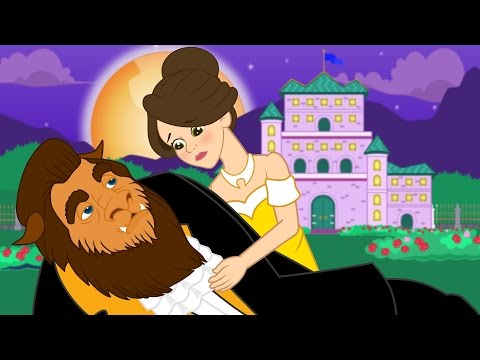
This masterwork is associated with the French novelist Gabrielle-Suzanne Barbot de Villeneuve who published the first version in 1740. Ever since there have been different narrations that adopt the narrative around the world.
Furthermore, the story centers on a young prince cast under a spell that could only be broken by true love. Thus after a long search for true love, he finds Beauty. She returns his love and they get married. The spell is broken and they live happily ever after. It is a lesson about the power of true love.
3. Snow White and the Seven Dwarfs
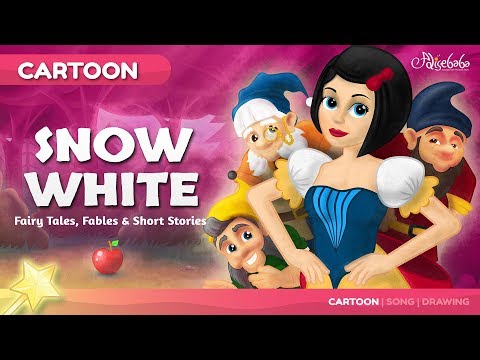
It is a German vintage fairy tale that was first published in 1812 by the Brothers Grimm in their Grimms’ Fairy Tales collection. The protagonist Snow White is a kind and gentle princess. She is also a beauty with lips as red as a rose and skin that is as white as snow.
More to it, the queen who is her stepmother learns Snow White is the fairest in the land by consulting her magical mirror. So it angers the queen and she plots to kill her. But the woodsman she gives the task allows her to escape.
Subsequently, Snow White runs for safety in the forest where a group of dwarfs becomes her new family. The wicked queen learns about her whereabouts and she disguises herself as an old woman and hands her stepdaughter a tainted apple which kills her.
The dwarfs guard her body and the climax of the story is when a prince shows up and with a kiss brings Snow White back to life. They marry and live a happy life together. This story emphasizes the strength of love.
4. The Little Mermaid

This classic fairy tale was published in 1837 as part of a collection of children’s fairy tales by the Danish author Hans Christian Andersen. A story about a young mermaid who lived with her widowed father, five sisters, and her grandmother.
The mermaids were allowed to visit the water’s surface on their fifteenth birthday. This gave them a sneak peek into the outside world. Thus she overheard the narrations of her elder sisters and she was eager for her turn.
When she was fifteen, she swam to the surface and observed a beautiful wedding of a prince on a distant ship. The ship drowned and the mermaid saved the prince.
She returned to the sea and desired to become human. Thus she visited the sea witch who gave her a potion that would give her two legs at the expense of her voice. So she went to the prince’s palace and took the solution. Though she was mute, she was human and could dance exceptionally.
Additionally, the prince was attracted to her but never fell in love with her. According to the witch, to get the human soul, she had to fall in love with the prince and marry him. Failure of the two conditions would lead to her death.
After the prince married somebody else, she began preparing for her death. But her sisters brought her a dagger to kill the prince so that by touching his blood, she would convert to a mermaid. She refused and instead stubbed herself to death.
Following her selfless deeds, she earned a chance to have a soul that guaranteed her an opportunity to rise in Heaven one day. This story teaches that sacrifices made towards good deeds are never in vain.
5. Sleeping Beauty
The earliest version of this first-rate fairy tale was discovered in the French writing Perceforest, around 1330 and 1344. The French writer Charles Perrault adopted the story in his 1697 fairy tales collections Histoires ou contes du temps passé. The story is also known as The Sleeping Beauty in the Woods in most English versions.
On top of that, Princess Aurora is cursed from birth by the evil Maleficent. The spell is released to cause her death on her sixteenth birthday by pricking her finger on a spinning wheel. Her family tries to keep her from her fate but it’s inevitable.
The time comes for her fate and she sleeps until a prince in love with her appears and awakens her. The moral of the story is that people should not rush into love, they should be patient until the right person awakens true love in them.
6. Little Red Riding Hood

It is a fist class fairy tale that has its roots in European folk tales during the pre-17th century. The most popular versions are by French author Charles Perrault and the German authors Brothers Grimm. The story is also called ‘Little Red Capor’ or ‘Red Riding Hood’.
Over and above that, the narrative is about a little girl named Red Riding Hood. Her name comes from the red-colored hooded cape that she wears. She meets a cunning wolf on her way to visit her sickly grandmother.
She gives the wolf details of where she was headed. Thus the wolf distracts her by advising her to collect flowers for her grandmother. As she is busy getting flowers the wolf goes to her grandmother’s house and disguises as Riding Hood. The grandmother falls for his trap and is swallowed by the wolf.
The young girl enters her grandmother’s house and finds the wolf who pretends to be her grandmother. So she is swallowed by the wolf. Some variations end there while others show the rescue of the girl and her grandmother from the stomach of the wolf. Further, the wolf’s stomach is cut and filled with stones which lead to his death.
Get to know Interesting Facts about Charles Perrault.
7. Rumpelstiltskin
This story is an authoritative fairy tale from the 1812 Brothers Grimm’s edition of Children’s and Household Tales. A certain miller seeks fame by bragging to the king and his community that his daughter can spin straw into gold. So the king locks the miller’s daughter up to prove her father’s words.
Furthermore, the king keeps her in a room full of straw for her to grind to gold. An imp-like man helps her do the task in exchange for her necklace on the first day and her ring on the second day.
On the third day, she is tasked with more work and the king offers to marry her if she fulfills the duty. But she has nothing left to give out. The imp appears as always and does the job in exchange for her firstborn child with the king.
Moreover, the king keeps his promise to marry her and they have a child together. The imp comes for the child but the queen offers her riches in place but the imp refutes riches. He makes a final deal that if she revealed his name she would keep her child.
The queen walks in the forest at night and hears the imp singing a song in which he mentions his name, “Rumpelstiltskin”. So she has a reply the next morning which secures her child and forces the imp to leave angrily. Afterward, some versions say he killed himself.
8. Hansel and Gretel

It is an outstanding fairy tale that brings forward the idea that it is not wise to trust strangers. It also opens our eyes to the view that some things that appear to be good are bad or better not all that glitters is gold.
To add on, the story is from a German fairy tale and was published first in the Grimm’s Fairy Tales in 1812. Hansel and Gretel are siblings who are abandoned in a forest and saved by an old witch who entices them with delicious food and soft beds. Her home is described to be a gingerbread, cake, and candy house.
Better yet, she intends to eat them so she feeds them to make them fattened. Gretel gets the confidence to kill the witch to save their lives. They then escape with her treasure once she is dead. The story is also called ‘Little Step Brother’ or ‘Little Step Sister’ in some variations.
9. Rapunzel

One of the European epitome fairy tales by the Brothers Grimm. The narrative recounts a couple who lived near the garden of a sorceress. The wife was expectant and craved the “rapunzel” plant.
Subsequently, the husband climbed up on the wall of the garden to get some for her wife. He was caught by the sorceress and she allowed him to collect as many but once the child was born, she would collect it. The couple tried to escape the sorceress but upon the birth of their daughter, she picked her.
She gave her the name Rapunzel. She grew up and had very long hair. The sorceress locked her up in a tower that no one could access except herself with the song, “Rapunzel, Rapunzel, let down your hair“.
Additionally, a certain prince heard Rapunzel singing and fell in love with her. He sang as the sorceress did so she let her hair down for him to climb the tower. They fell in love and he visited often which led to her pregnancy and the sorceress kicked her out and cut her hair.
When the prince showed up the sorceress let down the hair. To his shock, he was in the hands of the sorceress. He escaped by throwing himself down from the tower. He fell on thorns and was blinded. He wandered in the forest and heard Rapunzel singing so they reunited and she had already birthed twins. So they lived together henceforth.
10. The Frog Prince
A perfect fairy tale to drive home the values of respect and love in children. The Frog Prince Eadric insults a witch and she casts a spell that turns him into a frog. Only a princess can undo the curse.
One of the kingdom’s princesses often visits the swamp where Frog Prince lives in. They fall in love and he turns back into a prince and goes with the princess to his father’s land where they live as a happy couple.
11. The Princess and the Pea
The Danish storyteller, Hans Andersen is celebrated for this paradigm tale. It focuses on a prince who is unable to select a princess to marry. Many of those he pursued ended up being fake princesses.
One day a girl claiming to be a princess seeks shelter in the prince’s palace on a rainy night. They stack up about twenty mattresses and put a pea under the stack. In the morning she complains of discomfort on her bed.
Subsequently, the queen confirms she is a real princess since only a girl of such caliber would be so delicate. So the prince finds a wife and they get married.
12. Puss in Boots

This rags to riches exemplar fairy tale’s earliest version was written by Italian author Giovanni Straparola. It was part of The Nights of Straparola, a stories collection published around 1550 to 1553. But the well-known version is by Charles Perrault created during the 17th century.
Puss in Boots is the main character and he is a cat given human traits. He uses tricks and disguises to help his owner Costantino achieve nobility from a humble beginning. He dups kings and other respected persons in his region to amass wealth and power for his owner. Better still with his tricks, he gets him a princess to marry.
13. Jack and the Beanstalk
This outstanding fairy story gained widespread realization after it was rewritten by the Welsh-born, British-Jewish folklorist, Joseph Jacobs. He published it in the English Fairy Tales in 1890.
Additionally, in the modern day, it is included in the ‘Jack Tales’ series of stories which narrate different accounts about the character Jack. The story is about a poor country boy, Jack. He exchanges his family cow for some magic beans.
Afterward, these beans grow into a beanstalk tower that reaches the clouds. He climbs the beanstalk and ends up in a giant’s house. The giant threatens to eat him up claiming he could smell human blood. The boy strives to rescue his family possessions from the giant’s house and escapes before he is caught. He goes to his family and they celebrate him as a hero.
Check out Classic Fantasy Books Everyone Should Read.
14. The Three Little Pigs

Joseph Jacobs’s 1890 fable is the most popular yet the story dates back as early as the 1840s. This fine legend is about three little pigs whose houses are attacked by a wolf.
To add on, one of the houses is made of straw and another of sticks. So the wolf has an easy time destroying the two. The house that is left standing is made of bricks which proves difficult for the wolf to destroy.
15. The Ugly Duckling
The original myth was published by the Danish poet Hans Andersen in his 1843’s New Fairy Tales first volume collection. This model tale sparks the issues of bullying, discrimination, as well as the importance of being true to yourself.
In the story, a mother duck’s eggs are hatched and one of the ducklings is plain looking. So the siblings and other animals perceive him to be ugly. Hence they tease him verbally and physically. He observes wild swans migrating and admires them but he cannot join them due to his young age.
16. Goldilocks and the Three Bears
The first title of this prime fantasy was The Story of the Three Bears and it was featured in the English Fairytales collection. In 1922 the British Indian writer Flora Annie Steel rewrote the story increasing its acclaim.
Moreover, it is a good example to warn children of the dangers of entering people’s property or homes without their permission. Little Goldilocks is a curious girl and her mother sends her into the woods for some errands. She passed by the home of three bears who lived in the forest.
The bears had stepped out of the house but they left their porridge in bowls cooling. When Goldilocks found out the bears were out, she entered their house, drank some porridge, sat on their chair, and slept on their bed. When the bears returned, she escaped in fear and they never got a hold of her.
17. The Tortoise and the Hare

It is one of the paragons of Aesop’s Fables. Aesop was a storyteller in ancient Greece. The tale involves the hare who undermined the strength of the tortoise. He always ridiculed the tortoise for his slow speed. To put a stop to the matter, they organized a race.
What’s more, the hare ran very fast and left the tortoise by a large difference. So he decided to sleep to show the tortoise how slow he was. The tortoise went slowly and steadily until he passed the hare sleeping.
As the tortoise approached the finish line, the hare woke up and ran his fastest to catch up but to no success. So the tortoise emerged as the winner. The teaching from the story is to keep off looking down on others and to refrain from overconfidence.
18. The Pied Piper of Hamelin
A prototype folk tale that has been cited in the writings of famous authors like the German poet Johann Wolfgang. It has also appeared in the stories of German scholars Brothers Grimm and the English poet Robert Browning.
Furthermore, this story is a lesson on the dangers of failing to honor promises made. In the town of Hamelin, residents face rat infestation. A piper approaches the town’s mayor to clear the rats by playing his pipe. He is successful but the mayor refuses to pay all dues accusing the piper of bringing the rats to extort the community.
In anger, the piper leaves and returns on a vengeance mission. While all the people are in church, he plays the pipe and it attracts all the children in the town and he disappears with them forever.
Further, some versions add that some physically challenged children were left behind. They recounted the events to the society after the church service was over. So the community paid the piper huge amounts of gold for the children to be returned.
19. Aladdin and the Magic Lamp
This is a representative fiction that grabs our imagination into the thought of some magic that can bring all our dreams true. Poor and crafty Aladdin who lives in Al Kal’as outsmarts an evil sorcerer.
In the end, he gets a hold of a magical lamp that has the power to fulfill any dream. He uses the lamp to bring all his wishes to pass including marrying a beautiful princess.
20. The Emperor’s New Clothes

A classic cautionary tale on pretense. One of the highly praised versions of the story can be traced to 1837s Andersen’s Fairy Tales Told for Children. The story follows an emperor who valued and spent money on clothing at the expense of his society’s progress.
Two swindlers visit the capital of this empire and commit to making the emperor a unique outfit. This suit is expected to be invisible to the stupid or incompetent. So all his officials visit the swindler’s operating room to see the progress. Though the room is empty, they pretend to see the outfit to be considered wise and competent.
After some time, the swindlers announce the outfit is ready for the king to adorn. He is dressed in nothing at all but his officials lie they see a glorious look on him. So he is paraded and taken around his empire naked for all the people to see his outfit. A child cries out expressing that the king was naked. Yet nobody bothers and the procession continues and the swindlers escape the area.
See the Classic Children’s Books of All Time.
21. The Boy Who Cried Wolf
A superior myth that can be found in Aesop’s Fables. It is a warning to liars that a tendency to tell lies makes it hard for anyone to believe them even when they tell the truth.
The story centers on a shepherd boy who often cries out warning his community of a wolf attacking their flock. The community realizes he is only playing tricks. One day a wolf appears and everyone thinks he was joking calling for help. So the wolf eats the flock and some versions add that the young boy was also eaten.
22. The Gingerbread Man
It is a prototype fable interesting enough to captivate us throughout life. For toddlers, it can help them learn the activities in their surrounding like running. For older children, it cautions them against fleeing from their family or loved ones.
The story’s first feature on print media was in the American children’s St. Nicholas Magazine in its May 1875 issue. It is a narrative about an old woman who bakes a gingerbread man (boy).
The boy escapes and the entire village including the woman and her husband go on a chase but he disappears. He ends up in the hands of a wolf and he is eaten as he cries out until he is completely devoured.
23. The Lion and the Mouse

It is a classic fairy story that exists in Aesop’s Fables. The moral of the story is that all creatures are interdependent. Thus there is no large or small being that doesn’t need help from the other.
A mouse interrupts the sleep of a lion who threatens to kill him. He begs to be left free and promises to return the favor and the lion lets him free. Later, the lion is trapped in a net by hunters and the mouse frees him up when he hears him groaning.
24. The Elves and the Shoemaker
A fine tale included in the collection of the Brothers Grimm stories. The story advances the subject of being grateful and helpful to others. A poor shoemaker and his wife receive help in finishing their shoemaking tasks from three young elves.
Find out the Classic Baby Books Every Parent Should Know About.
25. Thumbelina
This classic fairy story talks about a childless woman who sought the advice of a witch. She was given a barleycorn and from its flower, it sprouted a tiny girl whom she gave the name Thumbelina.
The girl searches for a spouse and rejects so many requests from suitors seeking her hand in marriage. She finally meets a tiny flower-fairy prince whom she falls in love with. They get married and fly together to a house where they find a man with whom they tell their story. This man listens and writes their story.
26. The Snow Queen
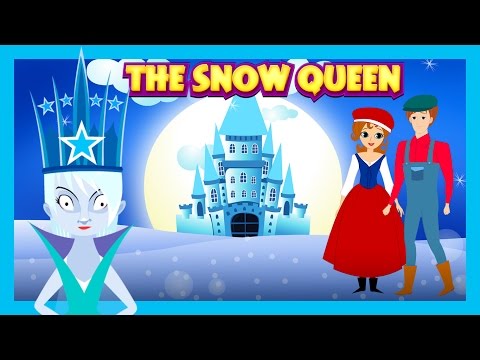
This authoritative fairy tale first appeared in the 1844s narratives, New Fairy Tales. First Volume. Second Collection. The collection is credited to Danish author Hans Andersen.
Kai or Kay is a young boy who has a friend known as Gerda. They are neighbors and they care for each other like siblings. There is also a magic mirror that distorts everything it reflects. So it breaks into tiny pieces that fall on different surfaces. One of the pieces falls on Kai and turns him into a wicked person.
Subsequently, he forgets about his family and friends and follows the Snow Queen. She flies with him to her world which is full of snow and ice. Gerda teams up with other accomplices to restore Kay to his senses at all costs.
27. The Little Match Girl
A supreme tale that was written by Hans Andersen. It revolves around a little girl selling matches on a street during a cold winter New Year’s Eve. She is afraid of her father’s fury if she returns home with no sales. So she freezes in the cold and decides to light the matches one by one to keep herself warm.
On top of that, as she keeps warm she begins to see pleasant visions and one is about her grandmother. So she keeps lighting as many matches so that the vision of her grandmother lasts longer. Once the matches run out, she freezes to death and her grandmother takes her soul to heaven. Those who observe her dead body on the street see a smile on her face.
28. The Bremen Town Musicians

This classic fairy story was featured in print form in Grimms’ Fairy Tales in 1819. Several farm animals escape their cruel masters and head to the city of Bremen to become musicians.
These animals never reach the city since they meet a band of robbers along their way. They scare the robbers and capture their spoils. Then they move to a new house where they live far from their masters.
29. The Twelve Dancing Princesses
A fine work of fantasy found in the Grimms’ Fairy Tales in 1815. Twelve princesses sleep in the same room but each on her bed. Their father ensures that each night their bedroom door is tightly shut. Yet in the morning, their shoes appear to be worn out suggesting they had been dancing during the night.
More to it, the distressed king orders to offer one of his daughters to the man who finds out the secret of the princesses. A soldier in the palace observes them sneaking at night and follows them to a castle where they dance all night long.
The soldier collects evidence to prove their behavior and tells it to the king. He is allowed to marry the eldest princess and he becomes the king’s heir. A curse is spelled against the princes who used to dance with the princesses for as many days as they danced together.
30. The Fox and the Grapes

This masterwork is part of Aesop’s fables. It is a perfect teaching applicable to people that ridicule things because they are unable to achieve them.
The plot follows a hungry fox that tried all he could to reach grapes that were hanging on a vine. When it proved to be an impossible mission, he went away making negative remarks. For instance, he said the grapes were not yet ripe. He also added that he was never in need of sour grapes.
Discover The Myths and Legends of Leprechauns: 20 Fun Facts.
These classic fairy tales enchant and entertain us with their timeless narratives. They expose us to different cultural heritage and widen our understanding of human virtue and traits. Besides they leave us with moral lessons that stick with us for life. Not forgetting, the stories remain relevant from generation to generation.
Planning a trip to Paris ? Get ready !
These are Amazon’s best-selling travel products that you may need for coming to Paris.
Bookstore
- The best travel book : Rick Steves – Paris 2023 – Learn more here
- Fodor’s Paris 2024 – Learn more here
Travel Gear
- Venture Pal Lightweight Backpack – Learn more here
- Samsonite Winfield 2 28″ Luggage – Learn more here
- Swig Savvy’s Stainless Steel Insulated Water Bottle – Learn more here
Check Amazon’s best-seller list for the most popular travel accessories. We sometimes read this list just to find out what new travel products people are buying.